China Top 10 CNC Machining Parts Manufacturers? This question deserves more than a simple ranking. Buyers often compare prices first, then discover hidden differences in tolerance control, material traceability, and delivery discipline. A polished website proves little. A stable production record proves more.
Professor Yusuf Altintas, a renowned machining researcher and author, has stated, “Process stability is the foundation of machining productivity.” That principle guides this overview. Reliable Machinery Cnc Parts manufacturers should demonstrate stable cutting conditions, calibrated equipment, skilled programming, and documented inspection procedures. Their workshops should show practical details, such as clean machine beds, organized tool storage, and measured components beside inspection reports.
The selected companies are examined through manufacturing capability, quality systems, equipment range, material experience, export performance, and customer support. CNC milling, turning, grinding, five-axis machining, and surface finishing also receive attention. These services matter when a prototype becomes a repeated production order.
Still, no ranking is perfectly universal.
A supplier may excel at aluminum housings but struggle with hardened steel shafts. Another may offer excellent precision but lack flexible communication. Price comparisons can mislead when tooling, packaging, inspection, and shipping are excluded. This article therefore focuses on evidence rather than impressive claims.
Some information may change as factories upgrade equipment or enter new markets. Readers should verify certifications, sample quality, lead times, and payment terms independently. A factory visit or video audit can reveal more than a brochure. The goal is not to declare one permanent winner, but to help engineers and purchasing teams identify dependable Chinese partners for demanding CNC machining projects.
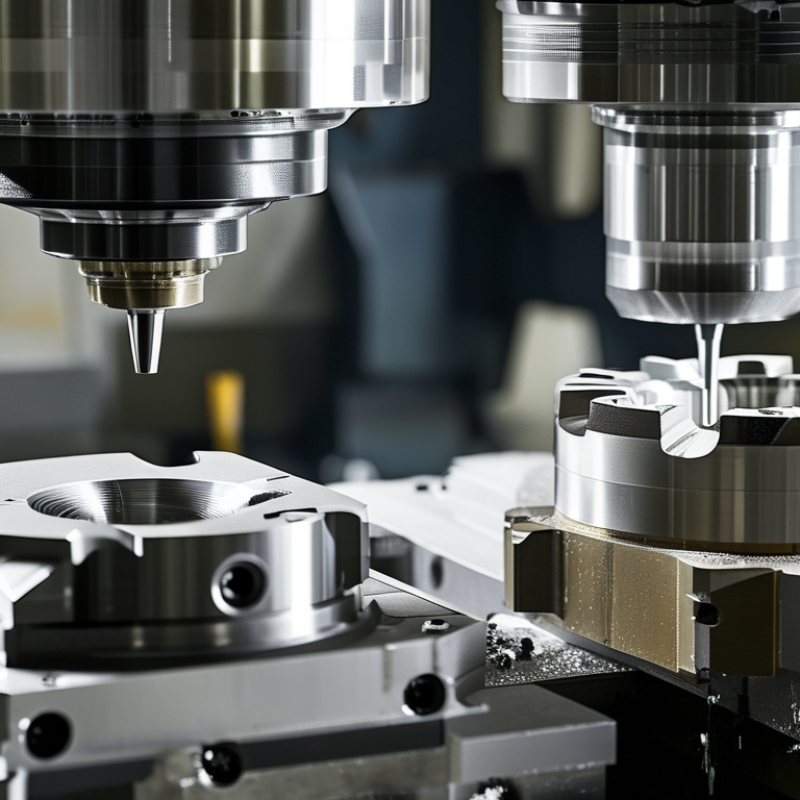
China’s CNC machining parts industry has become a major production base for automotive, medical, electronics, and industrial equipment components. China Machine Tool Industry Association reports continued growth in CNC equipment adoption, supported by factory automation and demand for tighter tolerances. Industry reports from Grand View Research also identify Asia-Pacific as the leading region for CNC machine tools, with China holding a central manufacturing position.
A reliable top-ten manufacturer list should examine more than equipment quantity. Buyers should check five-axis capacity, material control, inspection systems, delivery stability, and engineering support. A serious workshop should provide traceable certificates, coordinate-measuring-machine reports, and clear tolerance records. On the shop floor, practical details matter: clean coolant, calibrated probes, stable temperature, and protected aluminum surfaces. These details often separate repeatable production from attractive sample parts.
Market research frequently forecasts steady single-digit growth for CNC machining and machine-tool demand through the decade. However, forecasts can hide pressure on smaller suppliers. Skilled programmers remain difficult to retain, while energy, labor, and raw-material costs continue changing. Some factories invest heavily in automation but underinvest in process documentation. That is a weakness. Buyers should review first-article results, nonconformance records, and corrective-action speed before ranking any supplier. The strongest manufacturers combine modern machines with experienced operators, realistic lead times, and honest communication about design limits. Capability is measurable. Reliability is proven over repeated orders.

A credible ranking needs measurable evidence, not polished catalogs. UNIDO’s 2024 International Yearbook of Industrial Statistics places China’s manufacturing output at roughly one-third of the global total. That scale matters, but it does not prove machining excellence. Each manufacturer should be assessed through audited quality records, equipment capability, process stability, and delivery performance.
Quality should carry the greatest weight. ISO 9001 certification is useful, yet certification alone is not enough. The ISO Survey 2022 recorded more than 400,000 ISO 9001 certificates in China, showing broad adoption but also intense competition. Review first-article inspection reports, CMM results, material certificates, and nonconformance rates. Production capacity should include real evidence, such as five-axis access, tolerance history, surface-finish data, and batch consistency. Delivery scores should use actual order records, not promises. Cost transparency also matters. A low quote may hide tooling, inspection, or packaging charges.
Customer feedback deserves a smaller, carefully verified weight. Independent references, repeat-order rates, and response times reveal practical experience. Sustainability can include energy monitoring, coolant management, and waste controls. I would not pretend that one universal formula can rank every supplier fairly. Medical, aerospace, and consumer parts require different priorities. A transparent scorecard should explain those differences, publish evidence dates, and disclose missing data. That makes the top-ten list useful, even when some judgments remain imperfect.
China’s CNC machining parts sector serves electronics, medical devices, automotive, and industrial automation.
Grand View Research estimates the global CNC machine market reached about USD 83.99 billion in 2023.
The following profiles emphasize practical manufacturing strengths, not unverified rankings.
Reports from the China Machine Tool Industry Association repeatedly highlight automation, precision, and intelligent production as major industry directions.
Experience shows that capability claims still require evidence: material certificates, measured samples, process records, and realistic tolerances.
Some supplier profiles look impressive online but remain weak on change control.
That gap deserves attention.
China’s top CNC machining parts manufacturers differ more by capability than by marketing claims. A useful comparison begins with machine range, including three-axis, five-axis, turning, milling, and mill-turn equipment. Shop-floor experience matters when a part has thin walls, deep cavities, or difficult-to-machine features. Not every supplier handles these challenges equally well.
Materials also shape supplier selection. Common options include aluminum, stainless steel, carbon steel, brass, titanium, engineering plastics, and high-temperature alloys. Ask for material certificates and traceability records. Tolerance claims need careful review. A general tolerance of ±0.05 mm may be realistic for many parts, while tighter ranges require controlled processes, thermal stability, and coordinate measuring machines. Surface finish, flatness, concentricity, and inspection frequency should appear clearly in the quotation.
Tips: Request a sample inspection report, process flow, and tolerance map before approving production. Compare actual results, not only advertised capacity. Check whether the manufacturer supports prototypes, low-volume orders, and stable repeat production. Aerospace, medical equipment, automotive, robotics, electronics, and industrial machinery all require different controls. A medical housing may need clean handling and full documentation, while an automotive bracket may prioritize cycle time and cost. A perfect top-ten ranking is unrealistic. Some suppliers excel at complex titanium parts but struggle with fast commodity production. Others offer excellent speed, yet their inspection systems may need closer review. Trade-offs remain.
| Anonymous Manufacturer Profile | Core CNC Capabilities | Typical Materials | Typical Part Size | General Machining Tolerance | Surface Finishing Options | Inspection and Quality Controls | Typical Production Volume | Industries Served | Capability Rating |
|---|---|---|---|---|---|---|---|---|---|
| Profile 01 | 3-axis and 5-axis CNC milling; CNC turning; drilling; tapping; prototype machining | Aluminum 6061/7075, stainless steel 304/316, brass, copper, POM, nylon, PEEK | Small to medium components, approximately 5–500 mm | Typically ±0.01 mm; tighter tolerances available for selected features | Bead blasting, anodizing, passivation, powder coating, polishing | Calibrated measuring equipment, first-article inspection, dimensional reports, material certificates | Prototype to low and medium volume | Robotics, electronics, medical devices, laboratory equipment | ★★★★★ |
| Profile 02 | High-speed CNC milling; precision turning; Swiss-type machining for small parts | Aluminum alloys, titanium, stainless steel, tool steel, brass, engineering plastics | Micro-components to approximately 250 mm | Typically ±0.005–0.01 mm on controlled dimensions | Electroless nickel plating, anodizing, passivation, heat treatment, laser marking | Coordinate measuring machine inspection, optical measurement, process capability checks | Prototype, pilot, and repeat production | Automotive sensors, aerospace components, instrumentation, automation | ★★★★★ |
| Profile 03 | Large-format 3-axis milling; CNC turning; boring; machining of welded and cast parts | Carbon steel, alloy steel, stainless steel, aluminum, cast iron, bronze | Medium to large parts, approximately 100–2,000 mm | Typically ±0.02–0.05 mm, depending on part size and geometry | Painting, black oxide, galvanizing, powder coating, shot blasting | Dimensional inspection, hardness testing, surface roughness checks, weld inspection where applicable | Low to medium volume and project-based production | Industrial machinery, energy equipment, construction equipment, transportation | ★★★★☆ |
| Profile 04 | Complex 5-axis machining; simultaneous contouring; impeller and mold-component machining | Aluminum, titanium, Inconel, stainless steel, tool steel, engineering plastics | Small to medium complex components, approximately 10–800 mm | Typically ±0.005–0.02 mm with controlled process conditions | Heat treatment, passivation, anodizing, PVD coating, precision polishing | CMM inspection, profile scanning, surface-finish measurement, traceable inspection records | Prototype and small-batch production | Aerospace, defense, medical, high-performance engineering | ★★★★★ |
| Profile 05 | CNC turning and milling; live tooling; automatic bar feeding; threaded and shaft components | Stainless steel, brass, aluminum, carbon steel, titanium, POM, PTFE | Diameter approximately 2–80 mm; length up to approximately 500 mm | Typically ±0.01 mm; fine threads and fits available by specification | Nickel plating, chrome plating, passivation, black oxide, anodizing | Thread gauges, micrometers, optical inspection, batch sampling, material traceability | Medium to high volume | Valves, fluid controls, automotive, electrical connectors, consumer hardware | ★★★★☆ |
| Profile 06 | CNC milling; CNC turning; sheet-metal integration; rapid prototyping and design-for-manufacturing support | Aluminum, stainless steel, mild steel, brass, ABS, PC, nylon, PEEK | Small to medium parts, approximately 5–600 mm | Typically ±0.02 mm for standard features | Anodizing, powder coating, painting, laser engraving, vapor polishing for plastics | Visual inspection, dimensional sampling, basic CMM inspection, assembly verification | Prototype to medium volume | Consumer products, IoT devices, automation, product development | ★★★★☆ |
| Profile 07 | Precision mold machining; high-speed milling; EDM coordination; electrode and cavity machining | H13 and P20 tool steel, S136 stainless mold steel, aluminum, copper, graphite | Mold inserts and components, approximately 20–1,000 mm | Typically ±0.01 mm; surface and form accuracy depend on mold geometry | Polishing, texturing, nitriding, heat treatment, chrome or nickel plating | CMM inspection, contour measurement, steel-certification review, trial fitting and assembly checks | Prototype tooling to repeat mold production | Injection molding, packaging, consumer products, automotive interiors | ★★★★☆ |
| Profile 08 | Medical-grade CNC milling and turning; small-batch precision machining; deburring and clean handling | Titanium, cobalt-chrome, stainless steel 316L, PEEK, acetal, medical-grade aluminum | Small to medium parts, approximately 2–300 mm | Typically ±0.01 mm; tighter requirements reviewed individually | Electropolishing, passivation, anodizing, bead blasting, ultrasonic cleaning | Material certificates, lot traceability, CMM inspection, surface-finish testing, documented inspection plans | Prototype and low to medium volume | Medical instruments, dental equipment, laboratory systems, surgical devices | ★★★★★ |
| Profile 09 | Production CNC milling and turning; multi-spindle machining; repeatable fixture-based manufacturing | Aluminum, stainless steel, carbon steel, brass, copper, zinc alloys, reinforced plastics | Small to medium parts, approximately 5–700 mm | Typically ±0.02 mm for production features | Plating, anodizing, powder coating, e-coating, heat treatment, tumbling | Statistical process control, gauge calibration, in-process inspection, final sampling reports | Medium to high volume | Automotive, electrical equipment, HVAC, industrial automation | ★★★★☆ |
| Profile 10 | Prototype and low-volume CNC machining; 3-axis milling; turning; assembly and kitting support | Aluminum, stainless steel, mild steel, brass, copper, Delrin, nylon, ABS | Small to medium components, approximately 5–500 mm | Typically ±0.02–0.05 mm for general features | Anodizing, powder coating, painting, polishing, laser marking | Visual inspection, dimensional reports, gauge checks, assembly and functional testing | Prototype and low-volume production | Research equipment, consumer products, educational equipment, general machinery | ★★★☆☆ |
Note: The profiles are anonymized and represent common capability ranges among established CNC machining suppliers in China. Actual tolerances, material availability, certifications, production capacity, and finishing results should be confirmed against the supplier’s quotation, drawings, quality documentation, and inspection plan.
How to Select the Right CNC Machining Parts Manufacturer in China
A top-ten list can introduce suppliers, but it cannot prove suitability. Start with your drawing, material, tolerance, quantity, and delivery target. Then ask whether the manufacturer has produced similar parts. Request inspection reports, process records, and photographs of comparable work. Ask for evidence.
Visit the workshop when possible, either in person or through a live video inspection. Look for organized material storage, labeled work orders, calibrated measuring tools, and clean machining areas. Confirm whether quality staff use CMM equipment, gauges, or other suitable inspection methods. Check material certificates and batch traceability. These details often reveal more than a polished website.
Evaluate communication as carefully as machining capacity. A reliable supplier should identify unclear dimensions, unrealistic tolerances, or missing surface-finish requirements before production. Request a sample part or a small pilot order. Compare its dimensions with your approved drawing, not with verbal promises. Clarify packaging, replacement procedures, payment terms, and export documents in writing. Ask how the supplier handles nonconforming parts. Silence is a warning.
Price deserves careful review. The lowest quote may exclude inspection, tooling, finishing, or secure packaging. I have seen sourcing plans focus too heavily on hourly rates. That approach can create expensive delays later. My own checklist still needs revision when designs change. A practical choice balances engineering skill, documented quality control, transparent communication, and repeatable delivery. Small details matter.