Global sourcing often promises lower costs, wider capacity, and faster access to specialized manufacturing. Yet a cable can fail because of one loose terminal, a poor crimp, or unclear documentation. Custom wire assemblies help control these risks from the design stage.
John W. Mitchell, former IPC president and chief executive, has described the value of industry standards this way: “Standards build trust across the electronics supply chain.” That principle matters when buyers compare suppliers across borders. A custom assembly can specify conductor size, insulation type, connector position, shielding, labeling, testing, and packaging. Every detail becomes easier to verify.
Consistency matters.
Experienced sourcing teams also look beyond unit price. They review first-article samples, crimp-force data, continuity results, traceability records, and change-control procedures. These checks reveal whether a supplier can repeat quality after the first shipment. They also reduce delays caused by redesigns, mismatched connectors, or unclear technical drawings.
Still, custom sourcing is not automatically safer. A detailed specification can remain incomplete. I have seen projects overlook bend radius, service temperature, or installation space. That oversight can create expensive rework later.
The sections ahead examine why custom wire assemblies support global sourcing, from engineering flexibility to production control. They also consider supplier audits, communication gaps, logistics planning, and compliance documentation. The goal is practical judgment, not a simple promise of savings. A reliable assembly should fit the product, the process, and the realities of international supply.
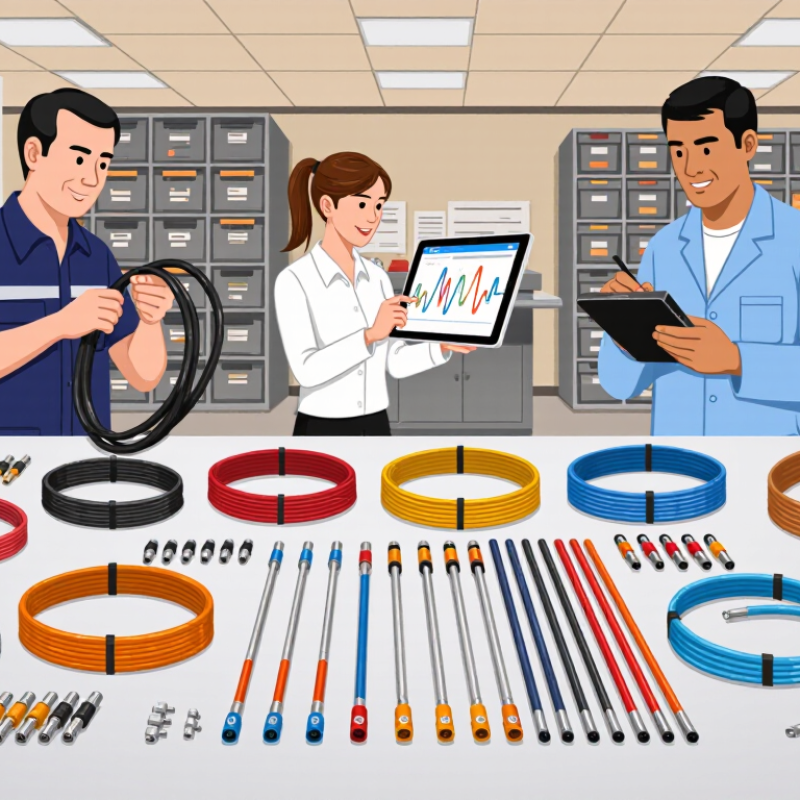
Custom wire assemblies are pre-cut, stripped, terminated, and tested cable systems built for a specific application. They may combine wires, terminals, connectors, shielding, labels, and protective sleeves. Unlike off-the-shelf cables, their length and routing match the equipment precisely. That matters inside crowded control panels, medical devices, vehicles, and industrial machines.
The Allied Market Research Wire and Cable Market report estimated the global market at USD 183.3 billion in 2021. It projects the market to reach USD 298.5 billion by 2031. This expansion increases the need for consistent assembly quality across international supply chains. The International Energy Agency also reported nearly 14 million electric car sales in 2023. Electrification brings tighter routing, higher current demands, and stricter inspection requirements.
A reliable custom assembly starts with engineering details, not just a purchase order. Suppliers review wire gauge, insulation, bend radius, connector fit, temperature limits, and test requirements. They can provide continuity testing, pull testing, and traceable inspection records. These controls reduce installation errors and simplify production abroad. In practice, the first drawing is rarely perfect. A connector may be difficult to service, or a sleeve may restrict movement. That feedback deserves attention. Better designs often emerge from those small failures. Global sourcing then becomes more than price comparison; it becomes a controlled process for repeatable electrical performance.

Custom wire assemblies begin with a clear electrical and mechanical definition. Engineers review voltage, current, signal type, temperature, bend radius, and available installation space. A short cable may need flexible insulation, while a power assembly may require thicker conductors and stronger terminals.
The design is converted into a controlled drawing. It identifies wire gauge, insulation material, connector positions, strip lengths, crimp dimensions, and labeling requirements. Engineers often build a small prototype before approving production. They check continuity, insulation resistance, polarity, and connector retention. Pull testing is useful too. A terminal can look secure but still fail under vibration.
Manufacturing requires repeatable work instructions and trained operators. Wires are cut to measured lengths, stripped carefully, and terminated with calibrated tooling. Each crimp should be inspected for conductor capture, deformation, and damage. Assemblies may then receive protective sleeving, clips, heat-shrink tubing, or molded strain relief. Inspection records support traceability during global sourcing.
A first design is rarely final. Field feedback may reveal a bend that is tighter than expected or a label that becomes unreadable. That is not a failure, but it demands correction. Packaging also matters. Cables should arrive without crushed connectors, tangled branches, or moisture exposure. Clear specifications, sample approval, and honest quality reports make supplier communication more reliable.
| Design or Manufacturing Dimension | Typical Requirement or Data | How It Is Verified | Global Sourcing Benefit |
|---|---|---|---|
| Application Definition | Voltage, current, operating temperature, flexing, vibration, moisture, and installation space are specified before design release. | Reviewed engineering drawings, approved specifications, and application risk assessment. | Creates a consistent technical baseline for suppliers in different regions. |
| Conductor Selection | Copper is commonly selected for high conductivity; conductor cross-sectional area is matched to current, temperature rise, and allowable voltage drop. | Conductor-size review, resistance measurement, and current-carrying capability assessment. | Balances electrical performance, material cost, weight, and logistics requirements. |
| Wire Insulation | Insulation material is selected for temperature, abrasion, chemicals, oil, moisture, and flexibility. Common material families include PVC, XLPE, TPU, and fluoropolymers. | Material certificates, dimensional checks, insulation resistance, and environmental testing when required. | Supports regional environmental and safety requirements without redesigning the complete assembly. |
| Cable Length and Routing | Finished length, branch locations, bend radius, routing clips, labels, and connector orientation are defined in a controlled drawing. | Cable-board measurement, go/no-go fixtures, visual inspection, and first-article approval. | Reduces installation time, routing errors, and field modification costs. |
| Connector and Terminal Configuration | Contact size, pin assignment, keying, locking features, sealing method, plating, and mating-cycle requirements are defined for each interface. | Pin-to-pin continuity testing, connector visual inspection, terminal retention testing, and mating checks. | Improves interchangeability and prevents incorrect connections during international assembly. |
| Shielding and Grounding | Braided or foil shielding may be specified for electromagnetic compatibility; drain-wire and ground termination methods are documented. | Shield termination inspection, continuity testing, and EMC validation where applicable. | Helps maintain signal integrity across electrically noisy equipment and different installation environments. |
| Assembly Process | Typical operations include wire cutting, stripping, crimping, soldering when specified, sealing, labeling, bundling, and protective sleeving. | Work instructions, calibrated tooling, crimp-height checks, pull-force tests, and process audits. | Standardized processes improve repeatability across production sites and purchase orders. |
| Electrical Testing | Every assembly may be tested for continuity, short circuits, miswires, resistance, and insulation performance according to the approved test plan. | Automated cable testers, resistance meters, and documented test records. | Provides objective acceptance data and reduces incoming inspection workload. |
| Mechanical and Environmental Validation | Testing can include flexing, vibration, temperature cycling, water or dust exposure, tensile checks, and connector retention, depending on the application. | Defined validation protocols, sample inspection, and test reports linked to revision-controlled drawings. | Reduces lifecycle risk when assemblies are shipped to multiple climates and industries. |
| Compliance and Documentation | Technical files may include bills of materials, drawings, inspection plans, material declarations, change records, and applicable safety documentation. | Document review, lot traceability, supplier quality records, and controlled engineering changes. | Simplifies customs, customer audits, regulatory reviews, and multi-country production control. |
| Packaging and Identification | Assemblies are protected against bending, moisture, abrasion, and connector damage; labels identify part number, revision, quantity, and lot information. | Packaging inspection, barcode or label verification, and shipment documentation review. | Improves inventory accuracy and reduces transport-related damage and receiving delays. |
| Supplier Qualification and Continuity | Supplier capability, tooling capacity, material availability, quality systems, lead time, and backup-source options are assessed before volume production. | Capability audits, sample approval, supplier scorecards, and periodic performance reviews. | Supports stable supply, controlled quality, and lower disruption exposure in global procurement. |
Note: Requirements vary by application. Final conductor sizes, insulation ratings, connector specifications, testing limits, and compliance obligations should be confirmed against the applicable engineering standards and approved product documentation.
Why Choose Custom Wire Assemblies for Global Sourcing?
Custom wire assemblies can make global sourcing more predictable. They match the equipment, connector layout, insulation needs, and installation space. This reduces field modifications and prevents loose wires from becoming costly service problems.
They also improve purchasing control. A documented assembly can include wire gauges, terminal types, cut lengths, testing methods, and revision numbers. Suppliers in different regions can follow the same technical package. This supports consistent quality, easier inspections, and clearer communication across time zones. Custom assemblies may reduce labor during final production because workers receive ready-to-install parts. They can also lower packaging volume and simplify inventory. However, custom design is not automatically cheaper. Tooling, sampling, and engineering changes may increase early costs. That trade-off needs honest review.
Tips: Request samples before approving volume production. Check crimp height, pull strength, continuity, labeling, and bend performance. Ask for material certificates and inspection records. Keep drawings clear, but allow practical feedback from experienced assemblers. A drawing can look perfect and still create assembly trouble. In production reviews, small details often matter, such as a sleeve that slips near a moving hinge or a label that fades after transport. Leave room for correction. That is not weakness; it is responsible sourcing.
Custom wire assemblies give global sourcing a controlled physical interface. Each cut length, terminal, seal, and label matches approved drawings. That reduces improvisation during production. The ISO Survey 2022 recorded 1,265,216 ISO 9001 certificates across 187 countries and economies. This figure does not prove every supplier performs equally. It does show how quality systems support international trust. Reliable assemblers document incoming materials, crimp-height checks, pull tests, continuity tests, and final visual inspections. Small details matter. A loose terminal can cause heat, vibration damage, or intermittent failure months later.
Compliance becomes more manageable when the assembly has a defined bill of materials and traceable components. Suppliers can map insulation, plating, adhesives, and packaging against applicable substance restrictions. They should retain lot records, test results, declarations, and change notices. The 2023 Logistics Performance Index covered 139 countries and highlighted persistent delays at borders and transshipment points. Complete documentation cannot remove every delay. It can reduce avoidable customs questions. Country-of-origin data, tariff codes, and accurate commercial descriptions deserve the same attention as the wire itself.
Supply chains benefit from repeatable designs, regional buffer stock, and dual-approved materials. Custom assemblies can reduce internal kitting and shorten line-side handling. However, over-customization creates dependence on one tool, terminal, or process. That weakness is easy to miss. Teams should review second-source feasibility, tooling ownership, minimum order quantities, and engineering-change controls. A “standard” assembly may become difficult to replace if one connector was never qualified elsewhere. The better question is whether its quality evidence travels with it.
Custom wire assemblies help convert quality, compliance, and supply-chain requirements into defined specifications, approved materials, inspection steps, test records, and lot-level documentation. The chart maps widely used international requirements to the control areas they directly address.
A value of 1 indicates direct relevance to the control area; 0 indicates that the requirement does not directly define that area. This is a standards-orientation map, not a certification or supplier-performance score.
References: ISO 9001:2015, IPC/WHMA-A-620, EU RoHS, EU REACH, IEC 60335-1.
Choosing custom wire assemblies for global sourcing starts with selecting the right supplier and assembly process. Technical experience matters, but practical communication matters just as much. A capable supplier should interpret drawings, confirm tolerances, and identify unclear requirements before production begins. Ask about conductor materials, insulation ratings, terminal compatibility, bending needs, and operating temperatures. Small details can cause costly failures.
Testing and traceability also guide the decision. Reliable suppliers should provide continuity testing, crimp-force controls, visual inspection, and documented inspection results. Certification records must match the intended market and application. Production capacity matters, but capacity alone is not enough. Review sample quality, process consistency, lead times, packaging, and shipping controls. A factory may promise speed, yet weak documentation can create delays later. I have seen supplier reviews focus too heavily on price. That approach often misses rework costs.
Tips: Request a pre-production sample and a clear inspection plan. Compare at least two qualified suppliers using the same specification. Confirm how design changes are approved and recorded. Check whether the supplier can scale from small pilot orders to regular production. Leave room for honest discussion about risks. No selection is perfect. A thoughtful review may still uncover an overlooked issue, which is exactly why supplier audits and periodic performance checks remain valuable.