What are Control Components and How Do They Work?
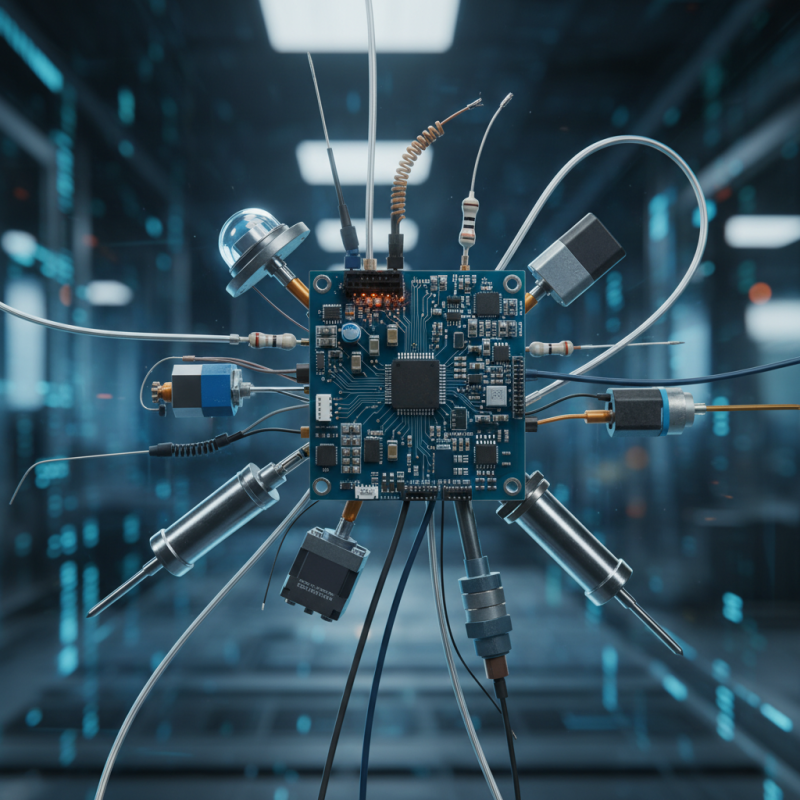
Control Components play a vital role in various systems and devices. They are essential in automating processes and ensuring precision. These components include sensors, actuators, and controllers. Each part has a unique function but works together seamlessly.
Understanding how control components work is crucial. Sensors detect changes in the environment, providing feedback. Actuators then respond, initiating actions based on that feedback. Controllers manage the entire process, making real-time decisions. This interaction creates a functioning unit, but it’s not always perfect.
In many instances, control components can fail or underperform. Limitations in design or external conditions can disrupt their efficiency. While advanced technology aims for precision, deviations can lead to unexpected results. Reflecting on these imperfections is essential for improvement. Exploring control components reveals both their power and their vulnerabilities.
Definition of Control Components and Their Role in Systems
Control components play a vital role in various systems. They are devices that manage the behavior of other components. Their functions include regulating temperature, pressure, and flow, essential in many industries. According to a recent market analysis, the automation sector is expected to grow by 10% annually, highlighting the significance of control components.
These devices interact with sensors and actuators. For example, a thermostat adjusts heating based on room temperature. Such interactions maintain system stability. However, inadequate calibration can lead to inefficiencies. In fact, reports indicate that improper settings can cause a 20% increase in energy consumption.
Additionally, control components must adapt to changing conditions. Systems are dynamic; they face fluctuating demands. While many systems are robust, occasional failures showcase the need for improvement. Studies reveal that 30% of system downtime results from control component malfunctions. Continuous monitoring and progressive adjustments can enhance reliability.
Control Components in Systems: A Bar Chart Representation
Types of Control Components and Their Specific Functions
Control components are vital in various systems, helping to maintain desired operations. They function by receiving input signals, processing them, and generating output actions. Among these, sensors, actuators, and controllers are key types, each serving distinct roles.
Sensors detect changes in the environment. For instance, temperature sensors can trigger heating or cooling systems. According to industry reports, nearly 30% of energy consumption in buildings can be optimized with smart sensors. This suggests that effective sensor integration can lead to significant energy savings. Actuators convert control signals into physical actions. They can open valves or move motors. Interestingly, organizations that enhance actuator technology experience a 15% increase in operational efficiency.
Controllers form the brain of control systems. They analyze sensor data and decide how actuators should respond. Many industrial facilities report that upgrading their controllers leads to a 20% reduction in waste. Yet, challenges exist. Compatibility issues between components often arise. Integrating new sensors with existing systems can be problematic. Such hurdles require careful consideration in design and implementation. Balancing innovation with practicality remains essential in the field of control components.
How Control Components Operate within Feedback Loops
Control components play a vital role in systems designed to maintain stability. They work by collecting real-time data and responding to changes in the environment. For instance, in a heating system, a thermostat monitors the temperature. When it drops below a set point, the thermostat activates the heating unit.
Within feedback loops, control components rely on continuous information flow. They adjust their output based on the input they receive. An example is a cruise control system in a car. When the vehicle speeds up or slows down, sensors detect these changes. The system then increases or decreases throttle to maintain the desired speed.
However, sometimes feedback loops can become unstable. If a control component overreacts to minor fluctuations, it may create oscillations instead of stability. This prompts a need for careful tuning and testing. Engineers often reevaluate these systems to ensure they perform as expected. Balancing responsiveness and stability is crucial yet challenging.
Applications of Control Components in Various Industries
Control components play a crucial role in various industries. They help manage and adjust systems effectively. For instance, the manufacturing sector employs these components for automation. According to a recent report by McKinsey, 70% of manufacturers are adopting automation to increase efficiency. This transition often relies on control components for seamless operation.
In the energy sector, control components are vital for maintaining grid stability. A report from the International Energy Agency mentions that smart grid technology can boost energy efficiency by up to 20%. By integrating advanced control systems, utilities can respond better to demand fluctuations. This capability enhances overall energy management, but it also requires continuous monitoring and adjustments.
**Tip:** Regularly assess the performance of control components. This can reveal hidden inefficiencies in your systems. Small adjustments can lead to significant improvements.
In the automotive industry, control components are essential for modern vehicles. They help manage everything from engine performance to safety features. The Global Automotive Industry Report indicates that up to 40% of a vehicle's cost is attributed to electronics and control systems. While these systems enhance safety and performance, they can also introduce complexity. Over-reliance on technology without proper oversight can lead to issues. Hence, thorough testing and validation are critical.
What are Control Components and How Do They Work? - Applications of Control Components in Various Industries
| Industry | Control Component | Functionality | Example Application |
| Manufacturing | PID Controller | Maintains desired output temperature | Temperature control in furnaces |
| Food Processing | Flow Control Valve | Regulates liquid flow rates | Juice bottling systems |
| Oil & Gas | Pressure Sensor | Monitors pressure levels in pipelines | Refinery processes |
| Automotive | Electronic Stability Control | Enhances vehicle stability | Vibration control in cars |
| Pharmaceuticals | Batch Process Controller | Controls batch mixing processes | Drug production |
Challenges and Future Developments in Control Component Technology
Control components are vital in automation and systems management. However, as technology evolves, several challenges arise. Ensuring compatibility with new systems is a significant barrier. Many legacy systems still operate today, making integration complex.
Recent studies, including a report from the International Society of Automation, suggest that nearly 70% of companies face challenges in upgrading their control systems. This affects efficiency and productivity. Cybersecurity is another growing concern. With increasing cyber threats, securing control components is crucial to maintaining system integrity.
Tips: Regular audits can help identify vulnerabilities. Training staff on cybersecurity best practices is essential.
Looking ahead, the future of control component technology lies in enhancing flexibility. Trends in system modularity show promise. Companies are experimenting with IoT integration, allowing real-time data analysis. This could lead to smarter, more adaptable systems. But the road ahead remains complex as companies navigate emerging technologies while addressing current limitations.