Choosing the right Double End Bolt in 2026 requires more than matching diameter and thread size. The correct selection depends on load direction, material compatibility, thread engagement, installation access, and service temperature. A bolt used in a stainless-steel pump housing faces different risks than one installed in a structural steel frame. Small details matter. A few millimeters of insufficient engagement can weaken the joint, while excessive tightening may damage softer threads.
John Bickford, a recognized authority on bolted-joint engineering, wrote, “The bolt is only one part of the joint.” That principle remains practical today. A reliable Double End Bolt must work with the nut, washer, tapped hole, clamping surfaces, and tightening method. Engineers should review ISO or ASTM requirements, confirm the bolt grade, and request traceable material certificates from reputable suppliers. Surface coating also deserves attention, especially where moisture, chemicals, or dissimilar metals are present.
Real-world selection is rarely perfect. Product catalogs may list similar dimensions, yet thread tolerances and heat treatment can differ. This is where careful comparison helps. Measure the application, not just the old bolt. Check thread pitch with a gauge. Inspect damaged threads before installation. When uncertainty remains, consult a qualified fastener engineer and test the joint under realistic conditions. Guessing is cheaper only until failure occurs. This guide explores the essential factors behind a dependable choice, while recognizing that field conditions can expose weaknesses that specifications alone may miss.
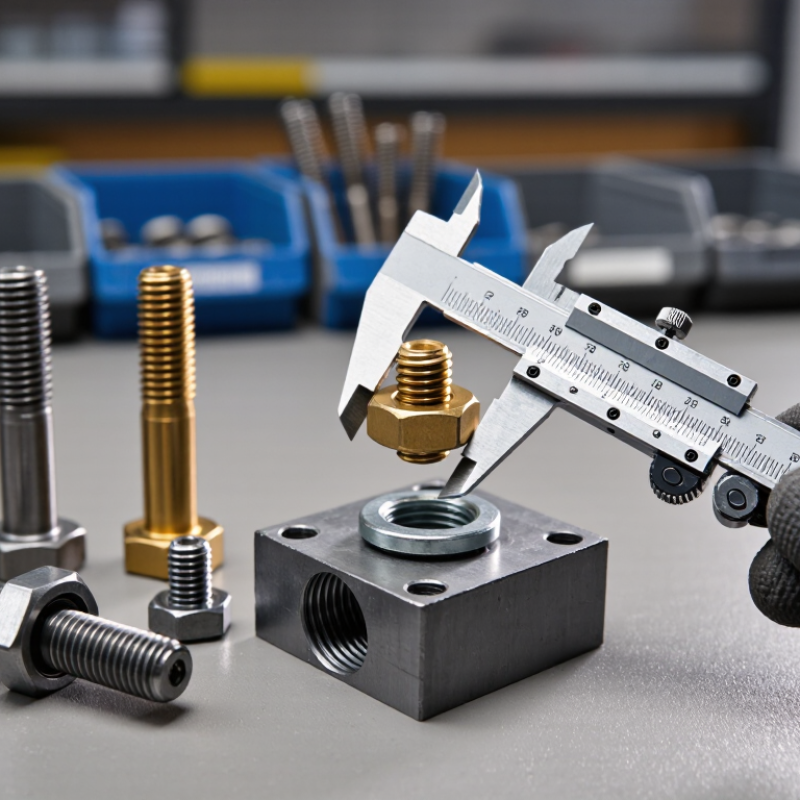
How to Choose the Right Double End Bolt in 2026?
Understanding Double End Bolt Types and Their Applications
Double end bolts, often called studs, have threads on both ends and an unthreaded center section. Their design supports repeated assembly without damaging the main housing threads. Fully threaded studs suit compact joints with limited space. Unequal-length studs work well when one side enters a blind hole and the other holds a nut. Reduced-shank types can improve alignment and reduce stress near the center.
Application matters more than appearance. Flange connections need accurate thread engagement and stable clamping force. Engine covers, pumps, gear housings, and structural machinery may require different lengths and materials. Match the bolt’s diameter, thread pitch, strength class, and corrosion resistance to the joint environment. A stainless option may resist moisture, while alloy steel may handle higher loads. Check the mating material carefully.
Small details matter.
Tips: Measure the usable thread depth before ordering. Leave enough engagement to prevent stripping, but avoid bottoming inside a blind hole. Clean both threads and inspect for burrs. Tighten with a calibrated torque tool when specifications are available. I once underestimated thread pitch because the bolt looked correct; the joint loosened after vibration. That mistake showed me why visual inspection alone is unreliable. Recheck length after adding washers, coatings, or spacers. Temperature changes and frequent maintenance may also influence the final selection.

How to Choose the Right Double End Bolt in 2026?
Matching Bolt Materials with Load, Temperature, and Environment
A double end bolt must match the load, temperature, and surrounding chemicals. Start with the joint, not the catalog. ISO 898-1 lists Class 8.8 fasteners at 800 MPa nominal tensile strength, with a minimum yield strength near 640 MPa. Class 10.9 reaches about 1,000 MPa tensile strength and 900 MPa yield strength. More strength is not always safer. Excessive preload can crush softer flanges or damage threads. Fit matters.
Temperature changes the decision. ASTM A193 covers alloy-steel and stainless-steel bolting for high-temperature and high-pressure service. For ordinary carbon steel, heat can reduce strength and accelerate relaxation. Stainless options resist oxidation better, but they may gall during installation. ISO 3506-1 specifies A4-80 stainless fasteners with 800 MPa minimum tensile strength. Check thermal expansion too. NIST material data commonly place austenitic stainless steel near 17 µm/m·K, versus roughly 12 µm/m·K for carbon steel. That difference can alter preload across a hot flange. In chloride exposure, corrosion-resistant steel may still suffer localized attack. Inspect the washer face, threads, and exposed end. Do not guess. A missed coating detail, contaminated thread, or poorly measured temperature can invalidate an otherwise careful selection.
| Material / Grade | Typical Minimum Tensile Strength | Typical Minimum Yield Strength | Recommended Temperature Range* | Load Capability | Environmental Suitability | Common Double-End Bolt Applications | Important Selection Notes |
|---|---|---|---|---|---|---|---|
| ASTM A193 Grade B7 4140/4142 Alloy Steel | 125 ksi 862 MPa | 105 ksi 724 MPa | Approximately −29°C to 540°C −20°F to 1,000°F | High | Suitable for high-pressure, high-temperature service in dry or protected environments. Requires suitable coating or corrosion control in wet or marine conditions. | Flanges, pressure vessels, valves, piping systems, and process equipment. | One of the most widely used high-strength choices. Verify allowable stress at the actual operating temperature and protect against atmospheric corrosion. |
| ASTM A193 Grade B16 Chromium-Molybdenum-Vanadium Steel | 125 ksi 862 MPa | 105 ksi 724 MPa | Approximately −29°C to 595°C −20°F to 1,100°F | High | Good resistance to elevated-temperature softening and oxidation when properly specified and protected. | Steam systems, boilers, high-temperature piping, and power-generation equipment. | Preferred over general alloy steel when sustained high-temperature strength is important. Check creep and stress-relaxation requirements. |
| ASTM A320 Grade L7 4140/4142 Alloy Steel | 125 ksi 862 MPa | 105 ksi 724 MPa | Approximately −101°C to 315°C −150°F to 600°F | High | Designed for low-temperature service with controlled notch toughness. Not inherently corrosion-resistant. | Refrigeration, cryogenic-adjacent equipment, low-temperature pressure vessels, and outdoor piping. | Use only when the required impact-testing and minimum design temperature are satisfied. Add corrosion protection for humid or saline environments. |
| ASTM A193 Grade B8 Class 1 304 Stainless Steel | 75 ksi 515 MPa | 30 ksi 205 MPa | Approximately −196°C to 538°C −320°F to 1,000°F | Medium | Good general corrosion resistance in many atmospheric, food-processing, and mildly oxidizing environments. | General stainless-steel flanges, process equipment, water systems, and moderately corrosive service. | Solution-annealed material has lower strength than Class 2. Confirm preload and thread engagement because high load may require a stronger grade. |
| ASTM A193 Grade B8 Class 2 304 Stainless Steel, Strain-Hardened | 125 ksi 862 MPa | 100 ksi 690 MPa | Approximately −196°C to 538°C −320°F to 1,000°F | High | Good general corrosion resistance, with better strength than Class 1. Performance decreases in chloride-rich or crevice conditions. | Higher-load stainless flanges, pumps, valves, and chemical-process equipment. | Strain hardening increases strength but may affect ductility and galling behavior. Use compatible lubrication during assembly. |
| ASTM A193 Grade B8M Class 1 316 Stainless Steel | 75 ksi 515 MPa | 30 ksi 205 MPa | Approximately −196°C to 538°C −320°F to 1,000°F | Medium | Better resistance than 304 stainless steel in many chloride, marine, and chemical environments because of its molybdenum content. | Marine piping, chemical processing, water-treatment equipment, and outdoor installations. | Use Class 2 when higher mechanical strength is required. Stainless steel is not immune to chloride stress-corrosion cracking or crevice corrosion. |
| ASTM A193 Grade B8M Class 2 316 Stainless Steel, Strain-Hardened | 110 ksi 758 MPa | 95 ksi 655 MPa | Approximately −196°C to 538°C −320°F to 1,000°F | High | Good choice for higher-load applications exposed to moisture, chlorides, and many industrial chemicals. | High-load marine flanges, chemical-process lines, water-treatment systems, and coastal equipment. | Check the exact product standard and heat-treatment condition. Prevent galling with proper thread fit, surface finish, and lubricant. |
| ISO Property Class 8.8 Medium-Carbon Alloy Steel | 800 MPa | 640 MPa | Typically −50°C to 300°C −58°F to 572°F | High | Suitable for general industrial and structural service when protected from corrosion. Zinc or other coatings may limit high-temperature use. | Machine bases, equipment frames, general mechanical assemblies, and non-pressure applications. | Do not substitute for pressure-boundary bolting without confirming the applicable design code, dimensions, marking, and traceability requirements. |
| ISO Property Class 10.9 High-Strength Alloy Steel | 1,000 MPa | 900 MPa | Typically −50°C to 250°C −58°F to 482°F | Very High | Best for high mechanical loads in dry or controlled environments. More sensitive to hydrogen embrittlement and corrosion than lower-strength steels. | High-load machinery, compact assemblies, engine mounts, and heavily loaded mechanical joints. | Use controlled plating and baking procedures where applicable. Avoid assuming that higher tensile strength automatically permits higher preload. |
| Nickel Alloy 625 Nickel-Chromium-Molybdenum Alloy | Approximately 120 ksi 827 MPa | Approximately 60 ksi 414 MPa | Approximately −196°C to 650°C −320°F to 1,202°F | High | Excellent resistance to seawater, pitting, crevice corrosion, and many aggressive chemical environments. | Offshore equipment, seawater systems, chemical processing, aerospace hardware, and high-corrosion service. | Use when corrosion resistance justifies the higher cost. Confirm the exact fastener specification, temperature-dependent allowable stress, and thread compatibility. |
Selecting the correct thread size, length, and strength grade prevents loosening, thread damage, and uneven loading. Match the bolt diameter and pitch with the tapped hole and nut.
For example, an M12 × 1.75 thread must not be forced into an M12 × 1.5 hole. Coarse threads usually handle dirt and minor damage better, while fine threads can offer more adjustment. ASME B1.1-2024 provides dimensional requirements for unified inch threads, supporting accurate gauge selection.
Length needs practical calculation. Include the required thread engagement, nut height, washers, and the unthreaded center section.
A useful field check is to leave one or two threads visible beyond the nut. Excess length may interfere with nearby parts. Insufficient engagement can strip softer materials.
I have seen installers measure the overall bolt, rather than the usable threaded length. That mistake is easy to repeat.
Strength grade should follow the joint load, temperature, and material compatibility.
ISO 898-1:2013 lists a nominal tensile strength of 800 MPa for class 8.8 fasteners, compared with 1,000 MPa for class 10.9. Higher strength is not automatically safer; it may increase brittleness or damage weaker threads.
Do not guess. Check the manufacturer’s test certificate and verify markings against the applicable standard.
Measure twice. One overlooked pitch can invalidate an otherwise careful installation.
Before purchasing a double end bolt, verify its standard, thread form, diameter, length, and material grade. ISO 898-1 lists property class 8.8 steel bolts at 800 MPa minimum tensile strength and 640 MPa minimum yield strength. Class 10.9 requires 1,000 MPa tensile strength and 900 MPa yield strength. These figures help match the bolt with the joint load. They do not replace engineering calculations.
Thread compatibility is equally important. ISO 965-1 commonly defines external thread tolerance as 6g, while internal threads often use 6H. A 6g stud may feel loose in a worn or oversized nut. That is not always a defect. Check the mating part’s actual gauge results. Measure both threaded ends, especially when one side enters a tapped hole and the other receives a nut. Small pitch differences can cause serious installation problems.
Material data also matters in heated or vibrating assemblies. ASTM A193 Grade B7, widely specified for industrial bolting, requires at least 125 ksi tensile strength and 105 ksi yield strength in its standard tables. Confirm the exact revision and size range. I have seen buyers trust the grade marking alone, then overlook coating thickness or thread runout. That shortcut can create poor engagement. A written inspection record is safer than memory.
Choosing the right double end bolt in 2026 requires more than checking diameter and length. Installation method strongly affects preload and service life. For small assemblies, a double-nut method gives useful control with ordinary tools. A calibrated torque wrench is still necessary. For large flanges, hydraulic tensioning can produce more consistent bolt loading, although equipment access and operator training become limiting factors. Threaded installation with an internal drive feature saves time, but damaged threads can remain hidden inside the joint.
Quality begins with traceable material certificates and verified dimensions. ISO 898-1 helps classify mechanical properties for carbon and alloy steel fasteners. ASTM F606/F606M provides recognized testing methods for strength and hardness. Check thread fit with gauges, not visual inspection alone. Confirm the coating is compatible with the mating material. Excessive friction can distort torque results. That detail is often missed.
Long-term performance depends on corrosion, vibration, temperature, and preload loss. The NACE IMPACT study estimated global corrosion costs at about 2.5 trillion US dollars annually, equal to roughly 3.4% of global GDP. This makes surface protection a design issue, not a cosmetic choice. Stainless or coated steel may perform better, but neither option is automatically superior. I would not rely on torque alone in critical joints. Rechecking torque may expose movement, yet it can also disturb a stable connection. Field records, lot traceability, and periodic visual inspections provide stronger evidence than a single tightening value.