How to Choose a Nylon Flat Transmission Belt?
Choosing the right Nylon Flat Transmission Belt is a practical engineering decision, not a simple material comparison. A belt may look smooth and strong on a warehouse shelf, yet fail after weeks of heat, dust, or repeated bending. The wrong width can also increase edge wear and tracking problems.
Market data shows why this choice deserves attention. Grand View Research estimates that the global conveyor belt market reached approximately USD 4.38 billion in 2023 and may expand at about 4.6% annually through 2030. This figure does not represent flat transmission belts directly, but it reflects broader investment in reliable material-handling systems. The U.S. Department of Energy also identifies power-transmission efficiency and correct tension as important factors in industrial motor performance. Small installation errors can waste energy.
The selection process should connect operating conditions with measurable belt properties. Check the required power, belt speed, pulley diameter, center distance, and available tensioning range. Nylon layers can offer high tensile strength and flexibility, but moisture may influence dimensional stability. Temperature, oil exposure, surface friction, and splice quality also matter. Habasit and Gates technical guidance both emphasize matching belt construction to load, speed, and pulley geometry. These recommendations are useful, though no catalogue can replace an on-site assessment. Measure the actual pulley and inspect the old belt. Then compare tensile rating, elongation, grip, and service temperature before choosing a Nylon Flat Transmission Belt. Sometimes, the cheapest option is only cheap at purchase.
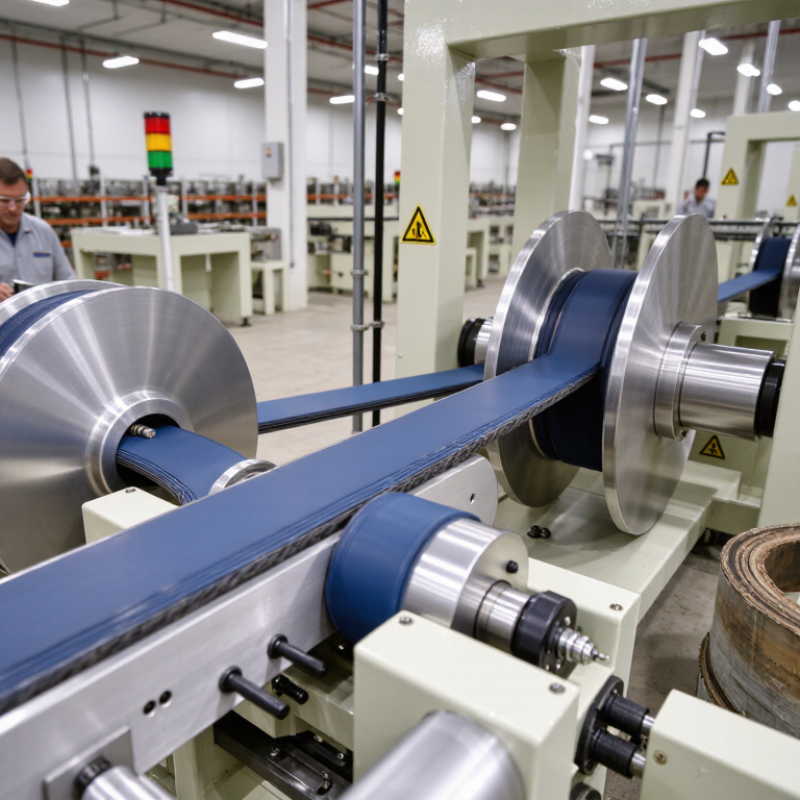
Define the Operating Requirements for the Nylon Flat Transmission Belt
Selecting a nylon flat transmission belt starts with the machine, not the belt catalogue. Define transmitted power, shaft speed, pulley diameters, center distance, and duty cycle. Record starting torque and shock loads, too. These details determine belt width, thickness, tension, and the required service factor.
The U.S. Department of Energy’s 2022 Industrial Motor Systems Market Assessment estimates that motor-driven systems consume about 68% of industrial electricity. Efficient power transfer matters. However, belt efficiency depends on alignment, surface condition, pretension, and slippage. ISO 4184:2022 provides dimensional and tolerance guidance for flat transmission belts and pulleys. Check its requirements alongside the belt supplier’s technical data. Also confirm temperature, humidity, oil exposure, dust, and cleaning chemicals. Nylon can handle demanding loads, but it is not immune to moisture or installation errors.
Tips: Measure under load. Inspect the pulley crown and alignment before ordering. Calculate belt tension from the actual power and speed, rather than copying an older setting. Leave space for adjustment and future inspection. Small errors matter. A neatly calculated belt can still fail when the motor starts repeatedly or the center distance changes. That is the part many specifications overlook. Recheck assumptions after one week of operation, especially if vibration, edge wear, or unusual heat appears.
Compare Belt Materials, Layers, Widths, and Thicknesses
How to Choose a Nylon Flat Transmission Belt?
Material selection should match speed, load, moisture, and pulley diameter. Nylon offers high tensile strength and good flexibility, while polyurethane improves abrasion resistance. Rubber can absorb vibration, but it may stretch more under continuous tension. In field inspections, I have seen belts fail because the coating was chosen before checking the operating environment. That approach is backwards.
Layer construction matters. A single-layer belt suits lighter loads and simpler conveyors. Multi-layer designs distribute tension across fabric plies, reducing elongation during startup. However, extra layers can increase stiffness and bending losses. The U.S. Department of Energy’s Industrial Motor Systems Market Opportunities Assessment reports that motor systems consume about 23% of U.S. electricity. Small transmission losses can therefore become expensive over long operating hours. The International Energy Agency also identifies industry as using roughly 37% of global final energy, reinforcing the value of efficient belt selection.
Width controls load distribution. A narrow belt may run hot and wear along its edges. An oversized belt can increase pulley stress and installation cost. Thickness should support the required tension without making the belt too rigid for the smallest pulley. Measure the pulley diameter, center distance, working tension, and available clearance before ordering. Check manufacturer test data, not only catalog claims. A practical choice is often a medium-thickness nylon belt with a wear-resistant cover, but this is not a universal answer. Temperature, joint quality, and alignment can change the result. Sometimes, the “strongest” belt performs worse.
Match Belt Features to Load, Speed, and Pulley Conditions
How to Choose a Nylon Flat Transmission Belt?
Choosing a nylon flat transmission belt starts with the load, speed, and pulley arrangement. Estimate the power, starting torque, and daily running hours before selecting belt width. A belt carrying a heavy load may slip if its tension is too low. Excessive tension can overload bearings and shafts. Neither condition is harmless.
Speed also changes the decision. High-speed systems need balanced pulleys, accurate alignment, and a belt rated for continuous operation. Check the smallest pulley diameter carefully. A tight bend can fatigue the nylon layers and create edge cracks. Pulley crowns help the belt track, but a sharp or damaged crown may push the belt sideways. Humidity and heat matter too. Nylon can respond differently as moisture and temperature change, so published operating limits should guide the final choice.
Tips: Measure the pulley diameter, belt width, and center distance on the actual machine. Inspect edges after the first operating shift. Watch for dust, glazing, vibration, or uneven tracking. These signs often reveal poor alignment before serious damage occurs. Do not choose by tensile strength alone; the belt’s working tension and splice quality are equally important. A common mistake is selecting a belt for normal load only. Starting conditions may be harsher. Recheck the calculation. Small machines can surprise you.
How to Choose a Nylon Flat Transmission Belt?
Match belt features to load, speed, and pulley conditions.
How to read this chart: Higher load capacity generally requires a thicker or reinforced nylon belt, while higher belt speed favors a lighter construction with good flexibility and balance. Small pulleys increase bending stress, so the minimum pulley diameter should typically be about 25–40 times the belt thickness. These values are preliminary engineering reference points; confirm the final rating, splice strength, tension, and pulley diameter for the actual application.
Verify Product Quality, Compatibility, and Supplier Support
Choosing a nylon flat transmission belt starts with evidence, not appearance. Check tensile strength, elongation, thickness tolerance, surface friction, and joint quality. A smooth belt can still fail if its core is uneven. In field inspections, I look for edge fraying, glazed surfaces, and permanent stretch after a short trial. Measure pulley diameter, shaft speed, center distance, and transmitted load before ordering. The U.S. Department of Energy reports that motor-driven systems use about 69% of industrial electricity, so small transmission losses deserve attention. A belt that slips wastes energy and creates heat near the pulley.
Compatibility depends on more than width. Confirm the belt’s operating temperature, humidity resistance, chemical exposure, and minimum pulley diameter. Ask for test results from the actual production lot, not only a general catalogue value. ISO 9001 certification indicates process control, but it does not prove every belt suits your machine. Request dimensional records, material specifications, and a sample for a controlled run. Supplier support matters. Reliable vendors explain tensioning procedures, provide installation drawings, and keep traceable batch records. They should also state replacement lead times and warranty limits clearly. This is often overlooked. I once treated a short delivery promise as proof of competence; it was not. A technically suitable belt becomes a poor choice when the supplier cannot answer basic questions about storage, splicing, or after-sales inspection.