2026 How to Choose the Best RF Feeder Cable for Your Needs?
Choosing the right RF Feeder Cable can significantly impact your signal quality and overall performance. With various options on the market, it is essential to understand your specific needs. A suitable RF Feeder Cable helps minimize signal loss and interference, which ensures reliable communications.
When selecting an RF Feeder Cable, consider factors like frequency, length, and environment. Different applications, such as broadcasting or telecommunications, have unique requirements. Ignoring these can lead to unsatisfactory results. Inspecting materials and connectors is crucial, as they affect durability and conductivity.
Making an informed decision about your RF Feeder Cable can prove challenging. It may take trial and error before you find the ideal fit. However, understanding the basic elements of these cables will empower you to select wisely. This selection process is not just about gathering information; it's about creating long-lasting connections.
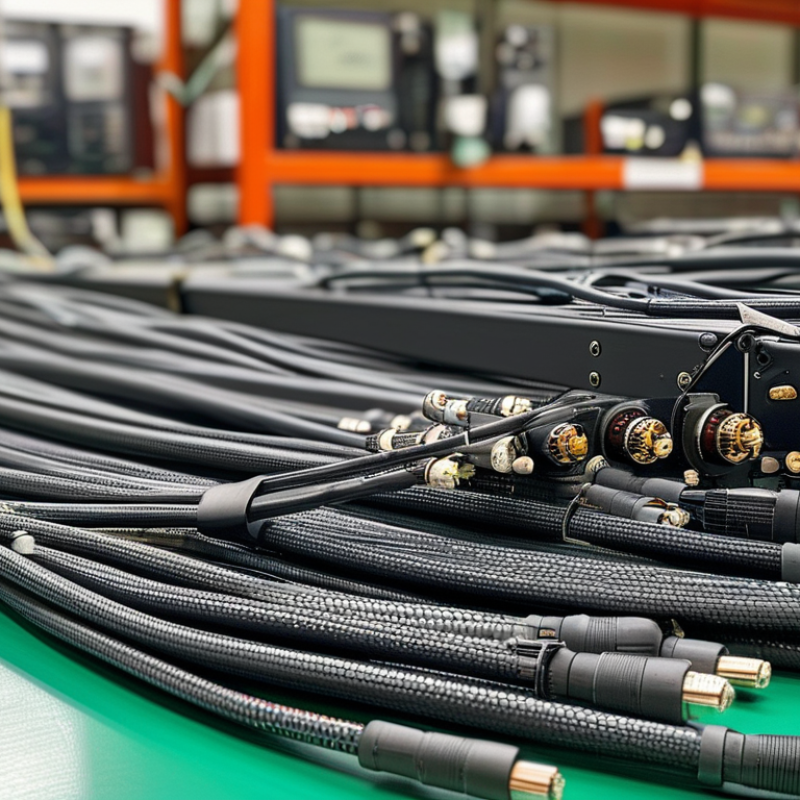
Understanding RF Feeder Cables: Key Specifications and Functionality
When selecting RF feeder cables, understanding key specifications is crucial. These cables transmit radio frequency signals and can significantly affect signal quality. Generally, a lower loss cable ensures better performance over long distances. According to industry reports, every 3dB increase in loss equates to halving the signal strength. This underlines the importance of choosing the right type for your setup.
RF feeder cables are characterized by several parameters, including frequency range, impedance, and attenuation. For instance, common impedance values are 50 ohms for communications and 75 ohms for broadcast applications. Your specific use case will dictate which impedance is suitable. A notable challenge exists in harmonizing cable length and type. Longer cables may result in increased attenuation, which can degrade signal integrity. Understanding these parameters enables more informed decisions.
Moreover, cable construction impacts durability and performance. Environmental factors like temperature can affect the jacket material. Waterproof and UV-resistant coatings are essential for outdoor installations. Reports indicate that improper installation can lead to significant signal loss, around 10–20%. Reflecting on these aspects helps avoid pitfalls and ensures optimal setup.
2026 RF Feeder Cable Specifications Comparison
Evaluating Loss Factors: Importance of DB Loss in Cable Selection
When choosing RF feeder cables, DB loss is a critical factor. It directly affects the performance and efficiency of the entire system. A study from the Institute of Electrical and Electronics Engineers (IEEE) emphasizes that higher DB loss leads to significant signal degradation. This loss is measured in decibels (dB), with lower values generally indicating better performance.
Optimal cable selection requires understanding the specific loss factors. Cables with a loss of 0.1 dB per 100 feet are often preferable for high-frequency applications, especially in wireless communications. However, some low-cost options might present losses exceeding 0.5 dB over the same distance. Users must carefully evaluate specifications to ensure they don’t compromise on quality for cost savings.
Environmental factors also influence loss. Exposure to extreme temperatures or moisture can degrade cable performance. Maintaining a reliable feed line often means investing in materials that withstand these conditions. Industry reports suggest that companies frequently overlook these details, leading to increased maintenance costs and system failures. A thorough evaluation of DB loss and environmental impact is essential for effective cable selection.
Choosing the Right Cable Type: Coaxial vs. Helical RF Feeders
When selecting RF feeder cables, choosing between coaxial and helical types is essential. Coaxial cables are widely recognized for their robust performance. They typically offer lower attenuation, especially over long distances. According to industry reports, coaxial cables can sustain signal losses as low as 0.2 dB per 100 feet. This characteristic makes them ideal for applications demanding high-frequency stability.
On the other hand, helical RF feeders exhibit unique advantages in specific applications. Their design allows for increased flexibility, which is crucial in environments with challenging installation requirements. Reports indicate that helical cables can handle dynamic movements better than coaxial types. However, end users should consider that helical cables might present higher attenuation rates, sometimes exceeding 1 dB per 100 feet. This can lead to signal degradation, affecting overall performance.
Deciding between these two types hinges on your specific needs. Think about installation environment and signal integrity demands. In some cases, combining both cable types might solve performance issues. Always assess the long-term implications of your choice, as initial cost savings could lead to higher maintenance in future scenarios.
2026 How to Choose the Best RF Feeder Cable for Your Needs?
| Cable Type | Band Frequency (GHz) | Attenuation (dB/100m) | Flexibility | Installation Ease | Cost (per meter) |
| Coaxial | 0.1 - 6 | 8 | Moderate | Easy | $0.50 |
| Helical | 0.5 - 18 | 6 | High | Moderate | $1.20 |
| Coaxial | 2 - 12 | 10 | Low | Easy | $0.75 |
| Helical | 1 - 18 | 5 | Very High | Difficult | $2.00 |
Determining Cable Length: Impact on Signal Quality and Performance
When choosing the right RF feeder cable, cable length plays a crucial role. Signal quality deteriorates with increased distance. The relationship between cable length and signal loss is often exponential. According to research by the IEEE, every 10-meter increase can lead to a 2 dB signal loss in certain cable types. This highlights the importance of carefully evaluating the required length before making a purchase.
Longer cables can increase attenuation. This loss reduces performance, especially in high-frequency applications. A study from the RF Engineering Association indicates that beyond 30 meters, significant degradation may occur. Users might face issues like increased noise levels and weaker signal integrity. A poorly chosen length can lead to unreliable data transmission. In critical systems, this could result in significant operational setbacks.
Feedback from professionals in the field often emphasizes testing different lengths. Collecting the right data helps influence final decisions. Two common approaches include using links with known performance metrics and conducting real-world tests. These methods ensure a better understanding of the equipment needs. In the end, taking a proactive approach to selecting cable length is essential in achieving optimal performance.
Selecting Connectors: Compatibility and Performance in RF Applications
When selecting connectors for RF applications, compatibility is crucial. The right connector must match the feeder cable specifications. This ensures signal integrity and minimizes loss. Common connector types include SMA, N-type, and BNC. Each has unique features, making it essential to assess your specific needs carefully.
Performance is another key aspect. The materials used in connectors impact their ability to handle frequency and power levels. High-quality metal components resist corrosion and provide better conductivity. Look for connectors rated for your operating frequency to avoid unexpected results. It's important to consider environmental factors too. A connector exposed to harsh conditions may require special coatings or designs.
Not every connector is perfect. Some may perform well in ideal conditions but fail under stress. Regular testing and monitoring are wise practices. Adapting your choices based on real-world results can lead to better performance. Always be open to revisiting your decisions as technology evolves. The right connector can significantly enhance your RF system's reliability and efficiency.