Selecting a reliable Formaldehyde Project supplier requires more than comparing equipment prices. Global buyers must assess process design, feedstock quality, emissions control, automation, commissioning support, and long-term maintenance.
Dr. Richard Corsi, an indoor-air-quality researcher, has emphasized, “The best way to improve indoor air quality is to control pollutant sources.” This principle matters during supplier evaluation. A well-designed plant should reduce exposure risks at storage tanks, reactors, loading points, and wastewater areas. It should also provide clear monitoring data, emergency procedures, and practical operator training.
The seven suppliers discussed in this guide represent different strengths. Some focus on complete EPC delivery. Others offer oxidation technology, formaldehyde reactors, energy integration, or flexible after-sales service. Their suitability may change with local feedstock, production capacity, climate, utilities, and environmental requirements.
Look beyond glossy brochures.
A serious buyer should request reference projects, process guarantees, equipment specifications, spare-parts plans, and documented performance results. Factory visits can reveal details that proposals hide, such as crowded pipe racks, difficult maintenance access, or weak safety labeling. These details matter.
No supplier is perfect. Even a technically strong contractor may struggle with communication, schedule control, or local installation support. This guide therefore compares capability and limitations, rather than presenting a simple winner. Careful due diligence remains necessary before signing any Formaldehyde Project contract.
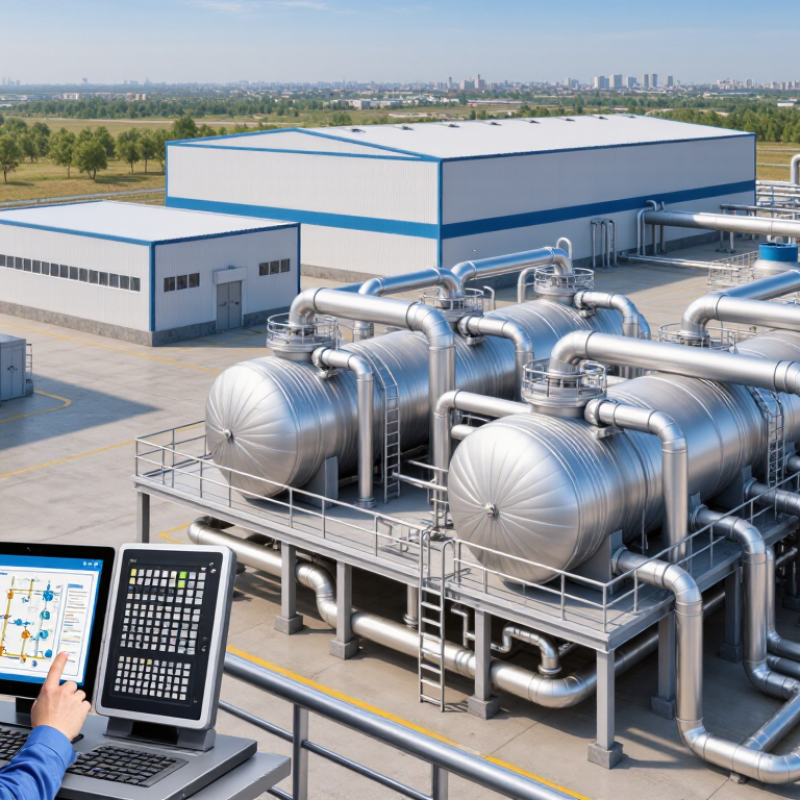
A reliable formaldehyde project supplier proves more than equipment capacity. It demonstrates process experience through verified reference projects, commissioning records, and operator training logs. Site visits matter. They reveal pipe routing, ventilation quality, emergency showers, and maintenance access that brochures often hide.
Independent data should guide supplier evaluation. The World Health Organization recommends a 30-minute indoor formaldehyde guideline of 0.1 mg/m³ in its 2010 air-quality report. The International Agency for Research on Cancer classifies formaldehyde as carcinogenic to humans in Monograph Volume 100F.
Therefore, a credible supplier must show emission-control calculations, enclosure design, leak-detection methods, and measured performance after commissioning. A certificate alone is not enough.
Technical depth also separates dependable partners from low-cost contractors. Buyers should request mass balances, heat-recovery figures, catalyst-life assumptions, wastewater plans, and documented spare-parts support. The supplier should explain how results were measured, not only present attractive numbers. Independent laboratory testing strengthens confidence. So does transparent handling of design limitations. A cheaper offer may conceal higher energy use or difficult maintenance. I have seen this risk underestimated. The mistake is understandable, but expensive. Reliable suppliers welcome audits, define acceptance tests clearly, and connect every guarantee to a measurable operating condition.

The seven leading formaldehyde project suppliers for global buyers offer more than basic equipment. They provide complete project support, from feasibility studies to commissioning. The strongest suppliers usually include process engineering firms, licensed technology providers, turnkey plant contractors, reactor manufacturers, emission-control specialists, automation integrators, and maintenance partners. Each role matters. A reliable supplier should explain production capacity, feedstock needs, energy use, and expected operating conditions clearly. Site references also matter, especially from regions with similar climates, utilities, and labor standards.
Experienced buyers should inspect engineering drawings, equipment materials, safety systems, and delivery records. Ask how the supplier manages corrosion, ventilation, storage, wastewater, and formaldehyde exposure controls. Independent testing can verify emissions and product quality before final payment. Some proposals look complete but exclude training, spare parts, or local installation support. That gap can become expensive. I have also found that the lowest quotation rarely represents the lowest project cost. It may still be attractive, but it deserves careful questioning.
Tips: Request a detailed scope matrix and a realistic project schedule. Compare warranty terms, inspection procedures, and after-sales response times. Confirm compliance with destination-country regulations before signing. Visit an operating reference site when possible. Keep technical communication in writing. A small misunderstanding about pipe standards or electrical voltage can delay commissioning. Good suppliers welcome difficult questions, although not every confident answer proves real experience. Evaluate evidence, not presentation quality.
Selecting among seven formaldehyde project suppliers requires more than comparing quoted prices. Experienced buyers examine completed plants, operating records, and troubleshooting evidence. Ask for references from facilities with similar capacity and feedstock. A supplier should explain reactor design, heat recovery, emissions control, and concentration limits clearly. Vague answers are warning signs. Request dated commissioning reports, not polished brochures.
Technology comparison should follow the full process line. Review methanol handling, oxidation control, absorption towers, cooling systems, and wastewater management. Ask how sensors detect temperature drift or catalyst decline. Modern controls can reduce manual adjustments, but software cannot fix poor piping or weak maintenance planning. During a technical meeting, request a process flow diagram and sample alarm response. Details matter. Compare energy use per tonne, catalyst service intervals, spare-part availability, and operator training hours. Independent testing can verify emissions and product concentration before handover.
Project capacity includes engineering, procurement, construction support, installation supervision, and after-sales response. Check whether the supplier has enough engineers for civil, mechanical, electrical, and process work. A realistic schedule should show delivery dates, inspection points, commissioning trials, and contingency time. I would inspect an operating site when possible. Photos are not enough. Some proposals exclude utility upgrades, laboratory equipment, or local compliance work. This is where comparisons become uncomfortable. Buyers should record assumptions, challenge optimistic guarantees, and allow redesign when site conditions differ.
For global buyers comparing formaldehyde project suppliers, certifications should be checked beyond a logo or scanned certificate. Ask for current ISO 9001 records covering engineering and quality control. ISO 14001 can indicate environmental management, while ISO 45001 supports occupational safety practices. The certificate scope must match the actual project. A certificate for office administration proves little.
Verify third-party test reports for emissions, equipment performance, and material resistance. Request calibration records for gas detectors, pressure gauges, and laboratory instruments. Suppliers should provide Safety Data Sheets, technical drawings, risk assessments, and emergency procedures. Where applicable, confirm CE marking, electrical safety approvals, hazardous-area protection, and compliance with the destination country’s chemical and workplace regulations. Local requirements may differ sharply.
Tips: Check certificate numbers directly with the issuing body. Confirm validity dates, factory locations, and audit scope. Visit the production site if the project is large. Observe ventilation systems, sealed transfer lines, alarm testing, and worker training records. Ask how formaldehyde leaks are isolated and reported. Do not accept “international standard” without a named standard and revision date. No checklist is perfect. I would also compare recent project references, though references can be selective. A reliable supplier should explain weaknesses clearly, not only display certificates.
| No. | Best-Fit Supplier Profile | Typical Project Deliverables | Key Certifications and Standards to Verify | Safety and Quality Evidence | Recommended Verification Questions | Best Use Case |
|---|---|---|---|---|---|---|
| 1 | Formaldehyde Resin and Chemical Supplier | Formaldehyde solutions, urea-formaldehyde or melamine-formaldehyde resins, additives, technical data, safety data, and batch documentation. | ISO 9001; ISO 14001 where environmental management is claimed; Globally Harmonized System (GHS) classification and labeling; applicable REACH registration or exemption information for European Union trade. | Current Safety Data Sheet; Certificate of Analysis for each batch; concentration, purity, water content, pH, and free-formaldehyde test results; transport classification and emergency response information. | Is the SDS written for the destination country? Are batch test methods disclosed? Does the supplier provide exposure controls, storage limits, spill procedures, and shelf-life data? | Resin production and chemical-processing projects |
| 2 | Engineered-Wood and Composite-Panel Manufacturer | Particleboard, medium-density fiberboard, plywood, laminated panels, flooring components, emission reports, and production traceability. | EN 13986 and EN 717-1 for relevant European wood-based panel applications; TSCA Title VI or CARB Phase 2 documentation for applicable United States markets; ISO 9001. | Third-party chamber-test reports; product thickness and moisture-conditioning details; production-batch identification; declared emission class; formaldehyde test method and laboratory accreditation. | Which standard applies to the destination market? Does the test report match the exact product, thickness, adhesive system, and production site? Is the certificate still within its validity period? | Low-emission building materials and furniture projects |
| 3 | Industrial Air-Monitoring Instrument Supplier | Fixed or portable formaldehyde monitors, electrochemical or optical sensors, data loggers, calibration accessories, alarms, and software. | ISO 9001; IEC 61010-1 for applicable measurement equipment safety; CE conformity for relevant European Union products; electromagnetic compatibility documentation where applicable. | Calibration certificate traceable to a national metrology institute or competent calibration laboratory; stated detection limit, accuracy, cross-sensitivity, response time, operating range, and maintenance schedule. | What interferents affect readings? How often is calibration required? Is the instrument suitable for continuous monitoring, high humidity, temperature variation, and the required concentration range? | Factories, warehouses, offices, schools, and construction sites |
| 4 | Accredited Indoor-Air Testing Laboratory | Sampling plans, indoor-air formaldehyde analysis, environmental reports, source investigation, verification testing, and remediation confirmation. | ISO/IEC 17025 accreditation for the specific formaldehyde method and matrix; ISO 16000-3 for aldehyde sampling and analysis; ISO 16000-6 where broader volatile-organic-compound testing is required. | Method detection limit; sampling volume and duration; blank samples; chain-of-custody records; laboratory quality-control results; uncertainty statement; accredited scope matching the requested test. | Is the laboratory accredited for the exact method? Who collected the samples? Were temperature, humidity, ventilation, and room-use conditions recorded during sampling? | Independent compliance testing and dispute resolution |
| 5 | Ventilation and Air-Exchange System Integrator | Mechanical ventilation design, outdoor-air systems, local exhaust, filtration, controls, commissioning, and indoor-air performance testing. | ISO 9001; ISO 45001 for occupational health and safety management where applicable; local mechanical, electrical, fire, and building-code compliance; ASHRAE or EN ventilation guidance as specified by the project. | Ventilation calculations; fan and filter specifications; airflow-balancing report; commissioning records; pressure-drop data; maintenance procedures; worker lockout and electrical safety procedures. | Does the design control the source or only dilute emissions? Are outdoor-air rates, exhaust discharge, noise, energy use, and replacement-filter costs documented? | Large buildings and facilities requiring continuous air-exchange control |
| 6 | Formaldehyde Abatement and Air-Purification System Integrator | Adsorption, catalytic oxidation, photocatalytic, or other treatment systems; pilot testing; installation; performance validation; and service contracts. | ISO 9001; applicable electrical and machinery safety conformity; ozone-emission evidence where ionization or photocatalytic technology is used; project-specific fire and hazardous-area compliance where relevant. | Independent removal-efficiency testing; by-product analysis; breakthrough capacity for sorbents; pressure-drop data; fail-safe controls; replacement interval; disposal instructions for spent media. | Is performance based on formaldehyde alone or a real mixed-air stream? Were humidity, temperature, airflow, concentration, and operating time controlled during testing? | Source-control support and contaminated-space remediation |
| 7 | EHS Compliance and Product-Documentation Supplier | Regulatory gap assessments, SDS authoring, chemical inventories, risk assessments, exposure-control plans, training, and export documentation. | ISO 45001; ISO 14001; GHS classification and labeling; REACH and CLP requirements for applicable European Union activities; destination-country chemical, workplace, and transport regulations. | Named regulatory specialists; documented review process; version-controlled SDS files; exposure scenarios; emergency procedures; worker training records; audit trail for regulatory updates. | Does the service cover the importing country and end use? Are regulatory updates monitored? Can the supplier distinguish legal limits, recommended limits, and internal company targets? | Global procurement, import compliance, and workplace-risk management |
7 Best Formaldehyde Project Suppliers for Global Buyers?
A supplier’s lowest quotation rarely shows the full project cost. Ask for a line-by-line breakdown covering process equipment, installation, testing, training, packaging, and spare parts. Confirm whether utilities, civil works, emissions controls, and commissioning support are included. A clear commercial offer should state currency, taxes, payment milestones, warranty terms, and price validity.
Delivery terms need practical checking. Request the proposed Incoterm, shipment port, estimated production time, and transport method. Compare these details with your site schedule. A delayed reactor or control system can stop the entire project. Ask how the supplier protects sensitive equipment from moisture and impact. Review export documents, safety data sheets, certificates of analysis, and local compliance requirements before signing.
After-sales support often separates a capable supplier from a convenient seller. Look for remote troubleshooting, commissioning assistance, operator training, and replacement-part availability. Ask for response times in writing. Request references from comparable projects, not only polished testimonials. In project evaluations, buyers sometimes focus too heavily on equipment price. That is a costly blind spot. I would also question optimistic delivery promises, because factory capacity can change. Even experienced suppliers may underestimate integration problems between instruments, utilities, and local construction teams. Clear responsibilities matter. So does honest communication.