2026 Best Cable Harness Manufacturers for Global Buyers

Choosing a cable harness manufacturer in 2026 demands more than comparing unit prices. Global buyers need evidence of engineering competence, stable production, and accountable quality systems. A polished website is not enough. This guide examines manufacturers through practical buying signals, including design support, material traceability, testing capacity, and export experience. It considers whether suppliers can interpret drawings, manage revisions, and protect connector integrity during shipment. Real production details matter. A documented crimp-force test, clear inspection records, and responsive technical communication often reveal more than marketing claims.

The evaluation also considers sector experience across automotive, industrial equipment, medical devices, energy systems, and electronics. Each application creates different risks, from vibration damage to insulation failure and incorrect pin mapping. Reliable manufacturers should explain their process instead of hiding behind broad promises. Buyers should verify quality certifications, applicable IPC/WHMA-A-620 practices, sample results, and customer references independently. Experience helps, but it can also create complacency. Even established suppliers may struggle with sudden volume changes, custom materials, or unclear specifications. That is why this overview focuses on evidence, communication, and practical fit rather than reputation alone. Some comparisons remain imperfect because supplier capabilities change, regional data can be limited, and public information may not reflect current factory conditions. Treat these findings as a disciplined starting point, not a final purchasing decision. The strongest choice is the manufacturer that can prove consistency, respond clearly, and support your product beyond the first shipment.

2026 Best Cable Harness Manufacturers for Global Buyers

Cable Harness Basics: Types, Applications, and IPC/WHMA-A-620 Standards

Cable Harness Basics: Types, Applications, and IPC/WHMA-A-620 Standards

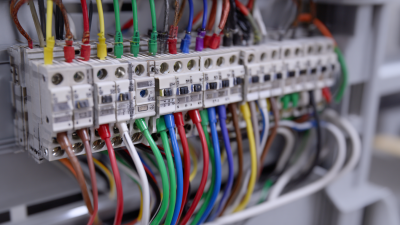
Cable harnesses group wires, terminals, connectors, and protective materials into one controlled assembly. Common types include discrete-wire harnesses, ribbon cable assemblies, coaxial harnesses, and overmolded designs. Each type suits different space, signal, temperature, and movement requirements. A compact sensor harness may use sealed connectors and abrasion-resistant sleeving. A control cabinet harness may need clear labels and flexible routing. The application should guide the design, not appearance alone.

In automotive, industrial equipment, medical devices, and communication systems, harness reliability depends on repeatable workmanship. Technicians check strip length, crimp height, terminal position, insulation support, and conductor damage. They also verify continuity, insulation resistance, and connector locking. Small errors matter. A connector that looks fully seated may still have a partially backed-out terminal. IPC/WHMA-A-620 defines accepted practices and inspection criteria for cable and wire harness assemblies. Its requirements address crimping, soldering, lacing, shielding, marking, and mechanical workmanship. Buyers should confirm the applicable product class and revision before production approval.

A practical quality file should include drawings, wire lists, test records, material certificates, and change history. Documentation is often the weak point. A harness can pass continuity testing and still fail during vibration, bending, or thermal cycling. Sampling plans also need careful review, because limited inspection may miss intermittent faults. Clear acceptance criteria, trained inspectors, and traceable corrective actions make supplier evaluation more dependable.
IPC/WHMA-A-620 Standard Revision Timeline

IPC/WHMA-A-620 defines requirements and acceptance criteria for cable and wire harness assemblies. The chart shows the publication year of each major revision, providing global buyers with a quick reference when reviewing supplier documentation and quality requirements.

Source reference: IPC/WHMA-A-620 revision history. Years shown represent the release year of each major edition.

Global Demand Drivers: Automotive, Aerospace, EV, and Industrial Harness Data

Global cable-harness demand is being reshaped by automotive, aerospace, electric vehicles, and industrial automation. Automotive remains the largest volume market, with global vehicle production exceeding 90 million units annually. Each vehicle may contain several kilometers of wiring, depending on its equipment and architecture. Modern driver-assistance systems add more sensors, connectors, and shielded circuits.

Electric vehicles are changing the value equation. More than 17 million electric cars were sold worldwide in 2024, according to widely cited energy-market estimates. High-voltage battery harnesses require orange insulation, precise crimping, stronger sealing, and strict electrical testing. Thermal cycling matters too. Small defects can become costly failures.

Aerospace uses fewer harnesses, but demands deeper traceability and weight control. Every conductor, label, and inspection record may affect airworthiness. Industrial buyers increasingly request robotic harnesses, flexible drag-chain assemblies, and assemblies for automated equipment. Factory projects also favor modular designs that reduce installation time.

Forecasts are not identical. Some count only finished harnesses, while others include connectors and related components. Buyers should question the data source, regional scope, and forecast year. Factory audits remain valuable. I have seen attractive samples fail when bend-radius limits were ignored. That weakness deserves attention. Reliable manufacturers should show process records, test methods, material controls, and practical experience with the buyer’s operating environment.

How to Evaluate Manufacturers: ISO 9001, IATF 16949, UL 758, and RoHS

For global cable harness buyers, certification names are only the starting point. During supplier reviews, I check the certificate scope, issuing body, site address, and expiry date. An ISO 9001 certificate shows a controlled quality management system. It does not guarantee perfect harnesses. Ask how the factory handles incoming wires, crimp height, pull-force tests, and final inspection.

IATF 16949 matters when harnesses serve automotive programs. It signals stronger process control, risk analysis, traceability, and defect-prevention practices. Still, paperwork can hide weak execution. Request process flow charts, control plans, and sample inspection records. I also look for batch labels that connect terminals, operators, machines, and test results. Details matter. One missing record may reveal a larger discipline problem.

UL 758 evidence should match the actual wire or cable construction, temperature rating, and application. A supplier should explain whether the relevant components carry recognition or approval, and provide current documentation. RoHS compliance requires controlled material declarations and, where appropriate, laboratory testing for restricted substances. Ask how suppliers manage plating, PVC compounds, solder, and replacement materials. Paper is not proof. A factory walk-through, realistic samples, and documented corrective actions provide better confidence. I have sometimes rated a supplier too highly after seeing clean certificates, then found inconsistent crimp insulation support during sampling. That mistake is worth remembering. A capable manufacturer welcomes detailed questions and can show repeatable evidence, not only polished files.

2026 Manufacturer Profiles: Capabilities, Certifications, Capacity, and Lead Times

Selecting a cable harness manufacturer in 2026 requires more than comparing website photographs. Global buyers need evidence of capability, certification, capacity, and delivery performance. A strong manufacturer profile explains wire-processing equipment, terminal crimping controls, ultrasonic welding, overmolding, and electrical testing methods. It should also identify supported wire gauges, connector families, and assembly complexity.

Certifications deserve careful review. ISO 9001 indicates a structured quality system, while IATF 16949 may suit demanding automotive programs. UL, CSA, or industry-specific approvals can support market access, but buyers should verify certificate scope and expiry dates. A certificate alone proves little. Request sample inspection reports, crimp-force records, continuity results, and traceability examples. Small details matter.

Capacity figures should include monthly harness volume, production shifts, staffing, and equipment redundancy. A factory producing 20,000 simple harnesses may struggle with 2,000 highly tested assemblies. Lead-time claims also need context. Prototype delivery may take two to three weeks, while mass production often requires four to eight weeks after approval. Ask how suppliers handle engineering changes, material shortages, and urgent replacements. Their answers reveal practical experience. Profiles sometimes present perfect performance, which deserves reflection. Real factories experience delays, rework, and forecast changes. Reliable manufacturers explain these risks clearly and show how corrective actions are measured.

Global Buyer Checklist: MOQ, Cost, Testing, Traceability, and Delivery Risk

For global cable harness buyers, MOQ should match the launch stage, not only the supplier’s production plan. Request prototype quantities, annual volume tiers, tooling charges, and price-break points. A low MOQ may hide higher unit costs or weaker process control. I would compare landed cost, including copper changes, freight, duties, scrap, testing, and payment terms. Do not trust a low quotation alone.

Testing evidence should be specific. Ask for continuity, insulation resistance, hipot, crimp pull-force, and dimensional records. IPC/WHMA-A-620 provides widely used workmanship guidance for cable and wire harness assemblies. Require sample reports before approval. Traceability must connect each harness to wire batches, terminals, operators, machines, and test results. QR or lot labels help, but only when records remain searchable. The 2024 Quality 4.0 industry discussion from the American Society for Quality highlights digital records as a practical route to faster root-cause analysis.

Delivery risk deserves equal attention. McKinsey Global Institute reported that disruptions lasting one month or longer occur about every 3.7 years. Ask for capacity data, critical-component lead times, backup processes, and written escalation rules. Keep realistic buffer stock for long-lead terminals and custom tooling. A second source can reduce exposure, but qualification also takes time. That part is often underestimated. The World Bank’s 2023 Logistics Performance Index also shows major differences in customs, infrastructure, and shipment reliability across economies. Check the actual shipping lane, not only the factory location. Perfect forecasts are not realistic. A documented risk review is better than confident promises.

2026 Best Cable Harness Manufacturers for Global Buyers - Global Buyer Checklist: MOQ, Cost, Testing, Traceability, and Delivery Risk
Global Buyer Benchmark Table
The figures below are practical industry benchmarks for supplier screening. Actual pricing, minimum order quantities, testing scope, tooling, compliance documentation, and lead times must be confirmed through a formal RFQ and sample approval.
Manufacturer Profile Typical MOQ Indicative Unit Cost Typical Lead Time Testing and Quality Controls Traceability Expected Delivery Risk Buyer Verification Checklist
Prototype and Low-Volume Specialist 1–20 assemblies USD 50–300 per assembly 1–3 weeks after design approval Continuity and pin-to-pin checks; sample insulation-resistance or hipot testing; visual inspection against drawings Material lot, operator, date, and inspection record should be retained per build Medium
Capacity may be limited during scale-up
Confirm drawing revision control, sample ownership, test report format, and engineering-change response time
Industrial Control and Automation Supplier 25–250 assemblies USD 15–120 per assembly 4–8 weeks 100% electrical continuity; short, open, and miswire detection; crimp-height monitoring; pull-force sampling Terminal, wire, connector, and lot numbers linked to production and test records Medium
Risk rises when special terminals are single-sourced
Request capacity plan, approved substitute policy, critical-component stock policy, and first-article approval process
High-Volume Consumer and Appliance Supplier 1,000–10,000 assemblies USD 1.50–25 per assembly 8–16 weeks, including tooling Automated continuity testing; crimp-force monitoring; barcode verification; statistical process control for critical dimensions Production order, date code, material lot, machine, and test result should be electronically recorded Low to Medium
Strong for repeat demand; vulnerable to forecast changes
Validate monthly capacity, tooling ownership, forecast flexibility, safety stock, and business-continuity arrangements
Automotive-Grade Harness Supplier 100–1,000 assemblies USD 10–150 per assembly 8–20 weeks for a new program 100% continuity and short/miswire testing; terminal crimp inspection; retention-force testing; capability studies for critical features Full lot genealogy from wire and terminal materials through workstations, testers, and final shipment Medium
Long qualification cycles and tight change control
Check applicable quality-system certification, PPAP capability, change-notification rules, traceability depth, and recall support
Medical and Regulated-Equipment Supplier 10–100 assemblies USD 25–250 per assembly 8–16 weeks after validation 100% electrical testing; documented visual inspection; controlled work instructions; validation of special processes where applicable Device, material, operator, equipment, inspection, and release records retained for the contractually required period Medium to High
Documentation or validation gaps can delay release
Review quality agreement, audit rights, document-retention policy, nonconformance process, validation package, and regulatory responsibilities
Harsh-Environment and Outdoor Equipment Supplier 50–500 assemblies USD 20–180 per assembly 6–14 weeks Continuity and hipot testing; sealing and connector-lock checks; environmental or vibration testing when specified by the design Cable, seal, connector, and compound lots linked to assembly records and environmental-test results Medium
Special seals and overmolds may have extended replenishment times
Confirm ingress-protection requirements, material compatibility, environmental test methods, spare tooling, and alternate-source options
Global Contract Manufacturer with Multi-Site Capacity 500–5,000 assemblies USD 3–100 per assembly 6–12 weeks for repeat production Standardized work instructions across sites; automated electrical testing; layered process audits; supplier quality monitoring Common part-number structure, centralized revision control, lot genealogy, and shipment-level records Low to Medium
Redundancy helps, but site transfers require requalification
Verify site-to-site equivalence, transfer protocol, logistics lanes, escalation contacts, disaster recovery, and customer allocation rules
Buyer Decision Rules
  • Compare suppliers using the same drawing revision, annual volume, packaging specification, Incoterm, and test requirements.
  • Separate recurring unit price from one-time tooling, fixtures, engineering fees, validation, freight, duties, and expedited-shipping costs.
  • Require a first-article sample and documented approval before releasing volume production.
  • For critical programs, maintain approved second sources for terminals, connectors, seals, and other long-lead components.
  • Use delivery-risk ratings as screening indicators only; confirm them with capacity evidence, historical on-time delivery data, and a written contingency plan.